
Moyu Lyu: Ghrelin in ALS
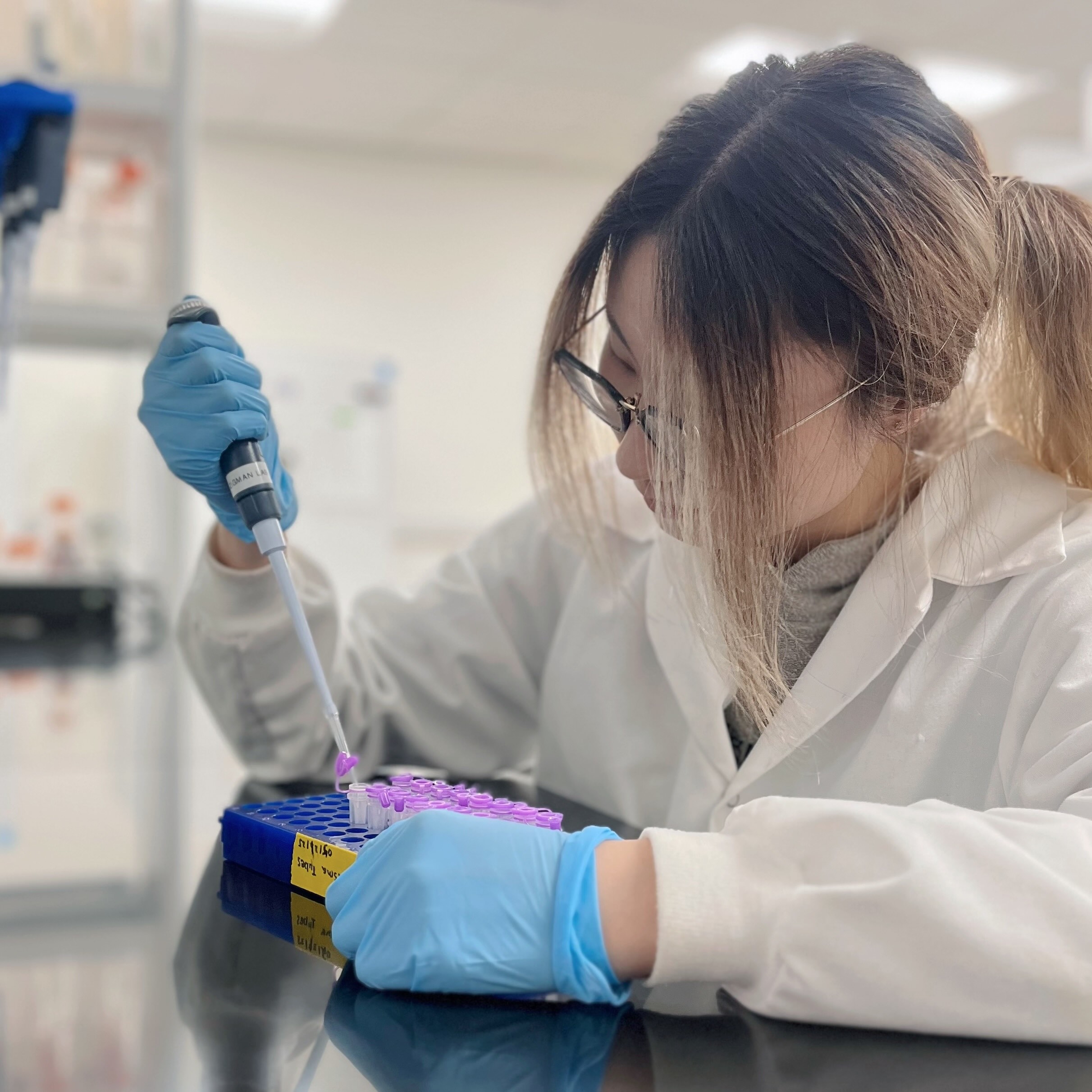
Moyu Lyu
Molecular Metabolism & Metabolic Diseases Track
Mentor: Jeffrey Zigman, M.D., Ph.D.
Undergraduate Degree: Bachelor of Science, Master of Science
Undergraduate Institution: University of California, San Diego
Hometown: Wuhan, China
What year did you matriculate into the graduate school at UTSW?
2023
How did you become interested in science and/or research specifically?
I was always fascinated by how intricate the biological system is behind every living creature, but it wasn't until my first year as an undergraduate student that I encountered the mysteries behind the human brain. This ignited my interest in studying neurological disorders and encouraged me to pursue cognitive science as a double major aside from general biology. I started my first independent research project as an undergraduate volunteer in Dr. Joseph Witztum's lab, studying the potential role of a class of proinflammatory molecules, oxidized phospholipids, in neurodegenerative disorders like Alzheimer's Disease. This experience taught me valuable lab techniques to apply what I have learned in the textbooks on hand, and further convinced me to pursue a career in science at the bench. Also, thanks to the expertise of Dr. Witztum in lipid and metabolism, I realized how interdisciplinary the subject of Neuroscience can be, and how metabolic dysfunctions can impact the brain. I completed this project and graduated from UCSD as a BS/MS student, and decided to continue my journey in studying neuroscience and metabolism at UTSW as a Ph.D. student.
Tell us about your research project and its relevance to human health (if any).
My research project in Dr. Jeffrey Zigman's lab is to investigate the role of the hormone ghrelin and its endogenous counterpart, liver-expressed antimicrobial peptide 2 (LEAP2) in the progression of Amyotrophic Lateral Sclerosis. ALS is a neurodegenerative disease characterized by motor neuron atrophy, followed by a guaranteed death within a few years of diagnosis because there is currently no cure on the market. Since ALS patients often suffer from reduced appetite and hypermetabolism, we would like to see if the hormone ghrelin, which increases appetite and reduces energy expenditure, can help rescue those pathologies. Therefore, my project aims to investigate the molecular mechanisms underlying the impact of ALS trajectory when altering the endogenous ghrelin and LEAP2 levels, and whether boosting ghrelin action or inhibiting LEAP2 action could be potential drug targets for the disease.
Why did you choose to come to UTSW for graduate school?
I first knew the school from its Nobel Prize-winning faculty members and abundant research opportunities and resources, especially when it comes to translational science from the bench to the bedside. Another reason why UTSW is my final choice is that Dr. Witztum, my PI for my undergraduate research, assured me that this research institution is a great place to pursue science, as he has a few acquaintances who have developed successful careers here as faculty members
In your opinion, what makes your specific program one of the top in the country?
The reason why UTSW and its Neuroscience and 3MD programs stand out from other research institutions across the country is that the school provides students with valuable opportunities for focusing on specific research fields. For example, UTSW has the Hypothalamic Research Center, which is dedicated to investigating the interlinking relationship between metabolism and neuroscience.
What do you love about your program and the 3MD track or why should a prospective student decide to get their Ph.D. here?
I think one of the unique features of the 3MD track is that not only does it provide you with a chance to discuss the cutting-edge research done by renowned faculty members in the field, but it also allows the students to ask for advice from those faculty members on how to pursue a career in science and on excelling as a graduate student in general. This is a great way to build connections with the faculty members and extend our conversations beyond scientific research to guide us on career development.
Share your final thoughts on why UTSW is the best institution for pursuing a graduate degree and why the 3MD track is a unique offering to students.
The thing I love most about UTSW is its collaborative environment. The vibe of the school encourages teamwork among researchers and labs, or even across different departments. This is especially important for me as a neuroscience student, since neuroscience itself is an interdisciplinary subject, and often requires knowledge from other perspectives. The 3MD program offers such a diverse opportunity to get ideas and expertise from multiple fields, as the students and faculty in the 3MD track are coming from different programs.