
Message from the Director
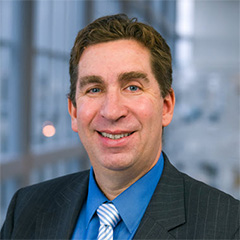
Professor
Director of Clinical Training
Graduate School: UT Southwestern (1998)
We are delighted that you are interested in the Doctoral Program and Internship in Clinical Psychology at UT Southwestern Medical Center.
At UT Southwestern, our aim is to prepare exceptional clinician-researchers. Our training is broad, empirically grounded, and rooted in respect for patients, colleagues, and the communities we serve. Students begin by developing a strong foundation in clinical science and professional practice. As they progress, their training becomes increasingly specialized in areas such as adult clinical psychology, child and pediatric health psychology, adult neuropsychology, and pediatric neuropsychology.
As an R1 research institution and academic medical center, UT Southwestern offers opportunities to collaborate across disciplines and learn from professionals engaged in innovative research, clinical care, education, and service. Students become members of a vibrant community of scholars and health professionals while developing greater independence in increasingly complex research, clinical, and professional responsibilities.
Clinical training begins in the summer following the first year. Students apply foundational interviewing, assessment, and intervention skills through practicum experiences at sites such as Parkland Memorial Hospital and Children’s Medical Center Dallas. During the second year, they build upon these experiences by providing psychotherapy through our adult psychotherapy training clinic. Their clinical responsibilities continue to increase in breadth, depth, and complexity throughout the program.
A distinctive feature of our program is its fully affiliated doctoral internship. Students progress through an integrated sequence of academic, research, practicum, and internship training. They advance to internship through an internal application and review process, rather than applying nationally for an external internship, allowing them to remain at UT Southwestern without having to relocate.
This model provides continuity in mentorship and training while enabling students to complete all requirements for the Ph.D., including the doctoral internship, in a median of 4 years. Over the past 10 reporting years, 98% of our graduates completed the program in fewer than 5 years, notably shorter than the 5 to 7 years commonly required to complete a Ph.D. in clinical psychology. Current completion, internship, licensure, and placement data are available on our Student Admissions, Outcomes, and Other Data webpage.
Most formal coursework is completed during the first 2 years, allowing students to devote increasing time to research, clinical specialization, and advanced professional development in later years. Our instructors are active clinician-researchers who contribute to scholarship, clinical practice, education, and professional service. Students learn not only from what our faculty teach but also from how they integrate science, clinical care, collaboration, and service throughout their careers.
The strength of our students’ preparation is reflected in their success after graduation. In recent years, our graduates have been selected for competitive postdoctoral fellowships at nationally recognized institutions, including Boston Children’s Hospital and Harvard Medical School, Stanford University School of Medicine, Mayo Clinic College of Medicine and Science, MD Anderson Cancer Center, Children’s National Hospital, and Cleveland Clinic. These fellowships span adult and pediatric neuropsychology, health and rehabilitation psychology, pediatric psychology, autism, and evidence-based intervention. Our alumni have gone on to careers in academic medicine, research, clinical leadership, healthcare systems, and professional practice.
Excellent training requires both high expectations and meaningful support. Students are expected to work hard, remain curious, respond constructively to feedback, and take increasing ownership of their development. In turn, our faculty and staff are committed to providing mentorship, creating opportunities for growth, and helping each student develop the knowledge, judgment, integrity, and confidence needed for a successful career in clinical psychology.
We are all part of this learning community, and we are deeply invested in the success of our students. We invite you to explore our website, learn more about our faculty and training opportunities, and consider whether UT Southwestern is the right place for the next stage of your professional development.
Richard C. Robinson, Ph.D.
Director, Clinical Psychology Doctoral Program
UT Southwestern Medical Center